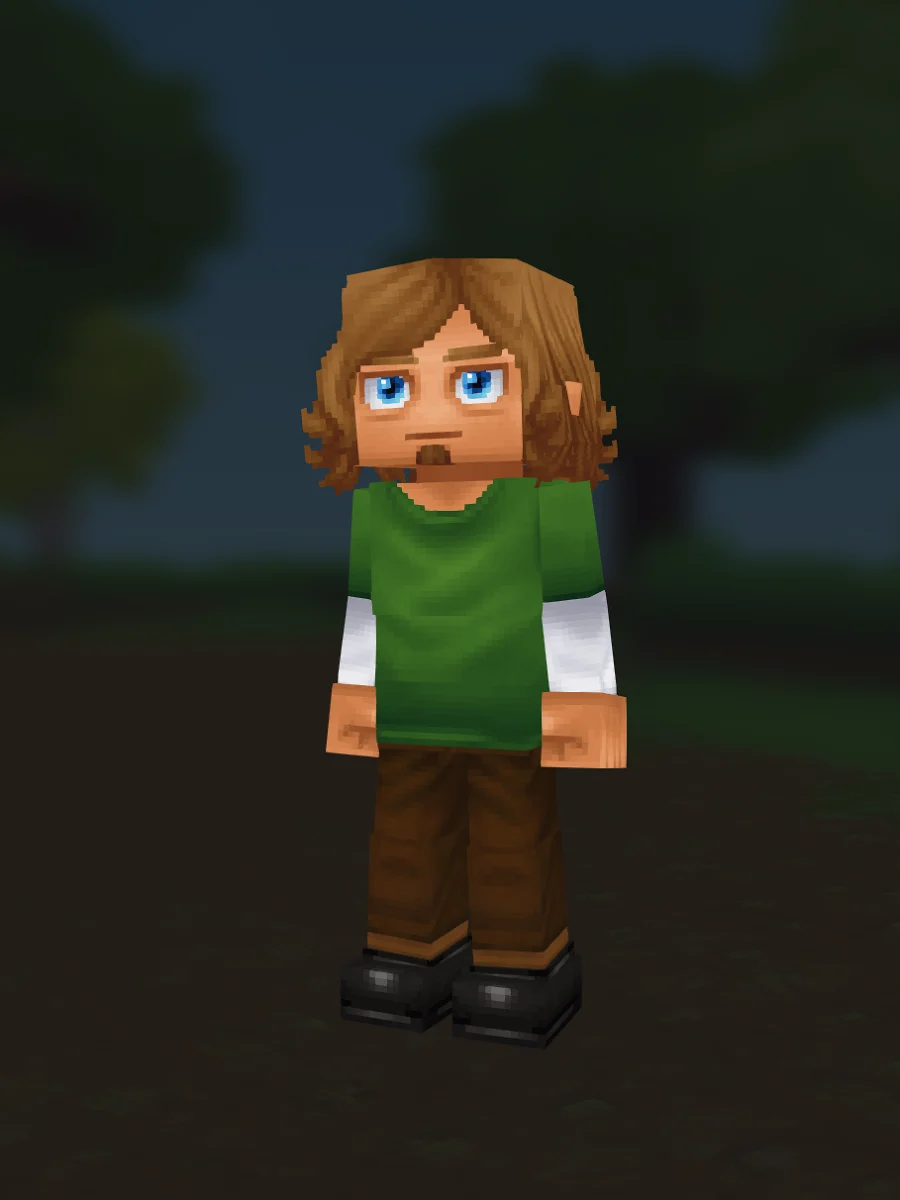
Casual Shaggy read: This cover is deliberately simple. The build works through Simple Medium hair in BrownLight, blue eyes, a tiny BrownLight Soul Patch, a green Layered Sleeve Shirt, brown Bulky Suede pants, and black Basic Boots. The goal is not a dramatic monster-hunter outfit; it is the instantly readable green-shirt-and-brown-pants comedy silhouette.
Keep the plainness: Shaggy can become worse if you over-style him. The green top should stay the first body cue, with the white sleeve layer giving just enough shirt separation. Brown pants keep the lower body familiar, and the black boots ground the avatar without turning him into an adventure hero. Resist armor, belts, or extra accessories unless a future screenshot shows a different version.
Face and hair balance: The brown hair is more important than the tiny facial-hair detail, but the Soul Patch helps close-view recognition. The blue eyes and tired-face direction can make the avatar feel relaxed rather than intense. If the face starts reading too heroic, bring it back toward a neutral or slightly tired expression before changing the outfit.
What Hytale cannot show: This recipe cannot show Scooby-Doo timing, nervous body language, a lanky cartoon frame, food props, or a chase scene. That means the page has to explain the ordinary clothing stack well. Users should know that the likeness comes from the color and casual posture, not from a perfect animated face.
Thumbnail check: On a homepage card, the green shirt and brown pants must still separate. If the cover is cropped too close to the face, it becomes a generic brown-haired avatar. If the body is too far away, the tiny Soul Patch disappears. A useful crop shows the hair, face, green torso, and enough brown lower body to make the casual identity obvious.
Fix order: If your result looks like a random villager, check the green shirt first, then the brown pants, then the hair. Do not fix a weak Shaggy by adding weapons or mystery-themed props. If the face looks too stern, soften the expression and keep the small facial-hair cue. The simplest version is usually the closest one.
Builder priority: Lock the green torso and brown lower body before touching small face details. Then check hair color and the Soul Patch. If the sleeve layer is not visible, the shirt can look flat; if the pants are too dark, the whole avatar loses the familiar casual rhythm. Treat the build as a color-recognition exercise first.
Screenshot maintenance: Shaggy benefits from a straightforward standing crop. A dramatic angle can hide the shirt/pants relationship, and a head-only crop makes the page less useful for users trying to copy the recipe. Keep enough body visible that the green-brown outfit proves the reference without needing the page title.
Variant boundary: A more classic lanky Shaggy would need creator options that change posture or proportions more strongly. A movie-specific or parody variant could add different details later, but this page should stay with the clean green-shirt version that the live cover actually shows.